
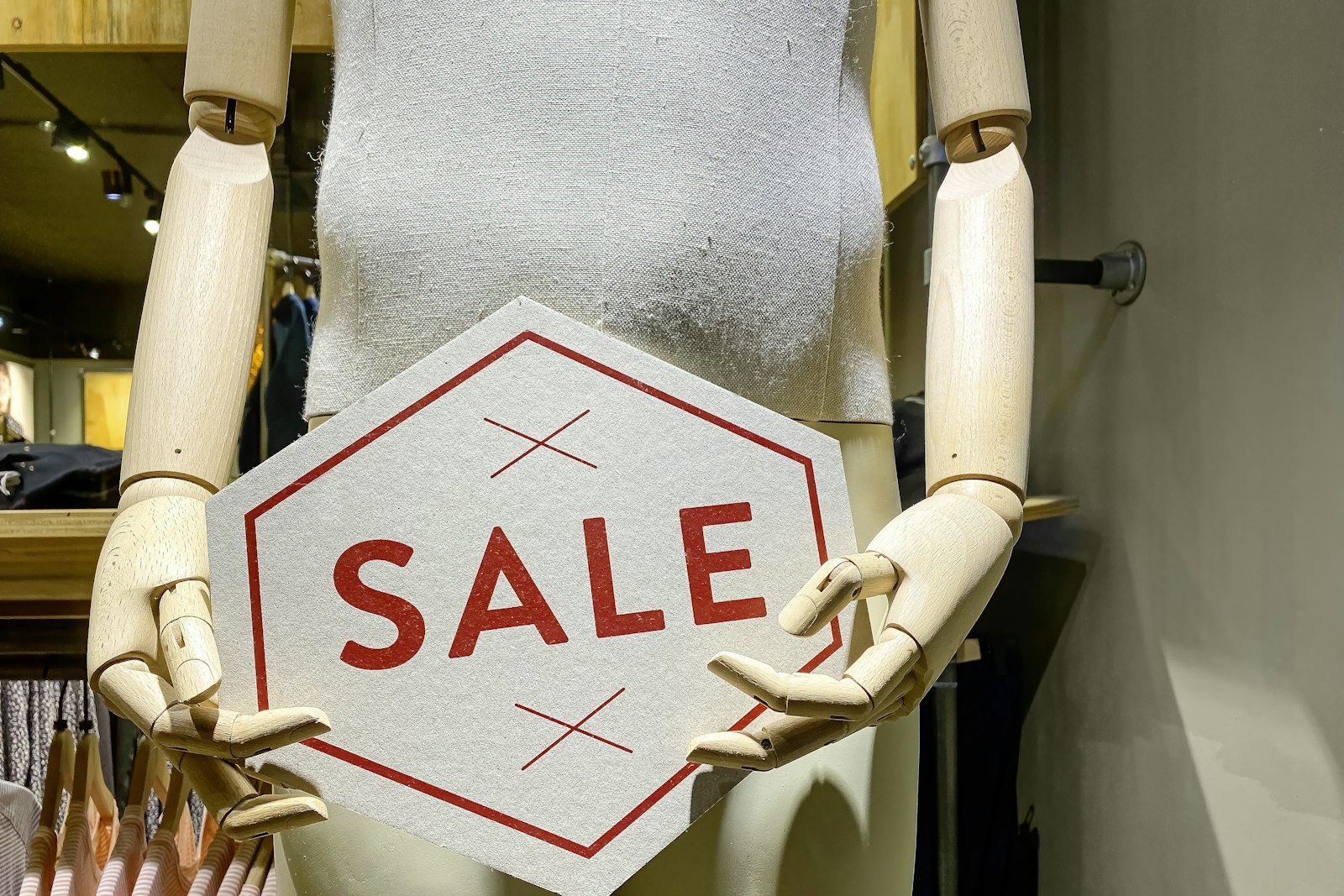
A big red percentage can make any price look good. A few checks show whether the discount is genuine.
Quick wins
- A discount is only as real as the price it’s compared with.
- Price history tools and saved screenshots show what an item usually costs.
- Countdown timers and low-stock warnings are designed to rush your decision.
- The best sale is one for something you planned to buy anyway.
Sales are designed to feel urgent and generous. Some are; many simply return an item to its usual price for a short time.
Check the reference price
The “was” or “compare at” price is what makes a discount look big. Ask:
- Has the item actually sold at that price recently?
- Is the sale price lower than other stores’ regular prices?
- Has the price dropped like this before?
Under Federal Trade Commission guidance, former-price comparisons are supposed to be genuine, but checking for yourself is the surest test.
Tools that help
| Tool | What it shows |
|---|---|
| Price history trackers | How an item’s price has changed over time |
| Wish lists with price alerts | When an item drops to your target |
| Screenshots | The price before a sale event begins |
| Other retailers | Whether the “sale” price is just the going rate |
Pressure tactics to notice
- countdown timers and “ending soon” banners
- “only 2 left” stock warnings
- bundles that include things you don’t need
- multi-buys, such as three for two, on items that won’t keep
Money saver
Decide your target price before a big sale event, such as a holiday weekend. If the price doesn’t reach it, you haven’t missed anything.
Worth a look
A discount on something you didn’t plan to buy still increases your spending. The 24-hour rule helps you tell real needs from sale-driven wants.
Buying with confidence
When the price is genuinely lower and the item was already on your list, buy it and enjoy the saving. For big purchases, like electronics, compare the sale against refurbished options, which can sometimes beat even a good sale.
You might be wondering
Are ‘compare at’ prices always accurate?
Not always. Under FTC guidance, former-price comparisons should reflect a genuine earlier price, but it’s still worth checking what the item has actually sold for.
When are the best times to buy?
It varies by product. Tracking the price for a few weeks tells you more than any seasonal rule of thumb.
Do price-match guarantees help?
They can, if the store honors matches with competitors you can find. Read the conditions, which often exclude marketplaces or clearance items.
These tips are general information. Prices, plans and programs vary by provider and location, so check the details with your provider before you switch or sign up.